The campus crackdown from the inside
THE CAMPUS CRACKDOWN FROM THE INSIDE
As a DOJ whistleblower raises explosive questions about the suppression of pro-Palestinian speech at Columbia, the acclaimed documentary The Encampments takes on new urgency.
What happens when government lawyers charged with investigating civil rights violations on college campuses begin to suspect that their own investigations may themselves be violating civil rights?
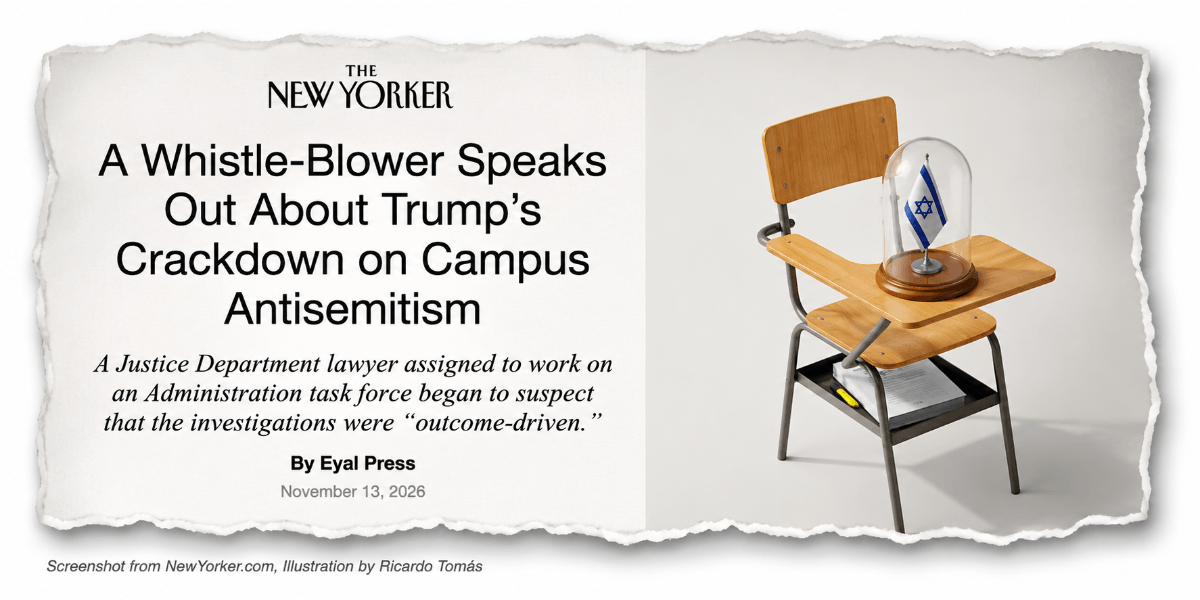
That’s the disturbing question raised by whistleblower Haley Van Erem, a former Justice Department civil rights attorney who worked on the Trump administration’s Joint Task Force to Combat Anti-Semitism.
In a November 13 article in The New Yorker, Van Erem describes growing alarm that the task force’s investigations into alleged antisemitism at universities, including Columbia, were less about establishing whether civil rights violations had occurred than about punishing institutions for allowing pro-Palestinian speech and protest the administration wanted suppressed.¹
At Columbia, she says, much of the alleged discrimination outlined in a draft government document consisted of legitimate political speech criticizing Israel’s war on Gaza that she believed was protected by the First Amendment. Van Erem also alleges that officials disregarded constitutional protections and pursued predetermined outcomes, using threats to withhold federal funding to pressure universities into restricting pro-Palestinian speech and activism.
“I had a real concern that the investigations and the settlements were aimed at, and had the effect of, squelching speech by students about what is happening to people, and to children, in Gaza,” she says in the piece.
Van Erem’s allegations raise a question that goes far beyond Columbia: If the government can use civil rights investigations to intimidate universities and silence criticism of Israel’s U.S.-backed war on Gaza, what becomes of free speech, academic freedom, and the right to dissent more broadly?
For educators, the acclaimed documentary The Encampments provides a powerful starting point for examining that question in the classroom.
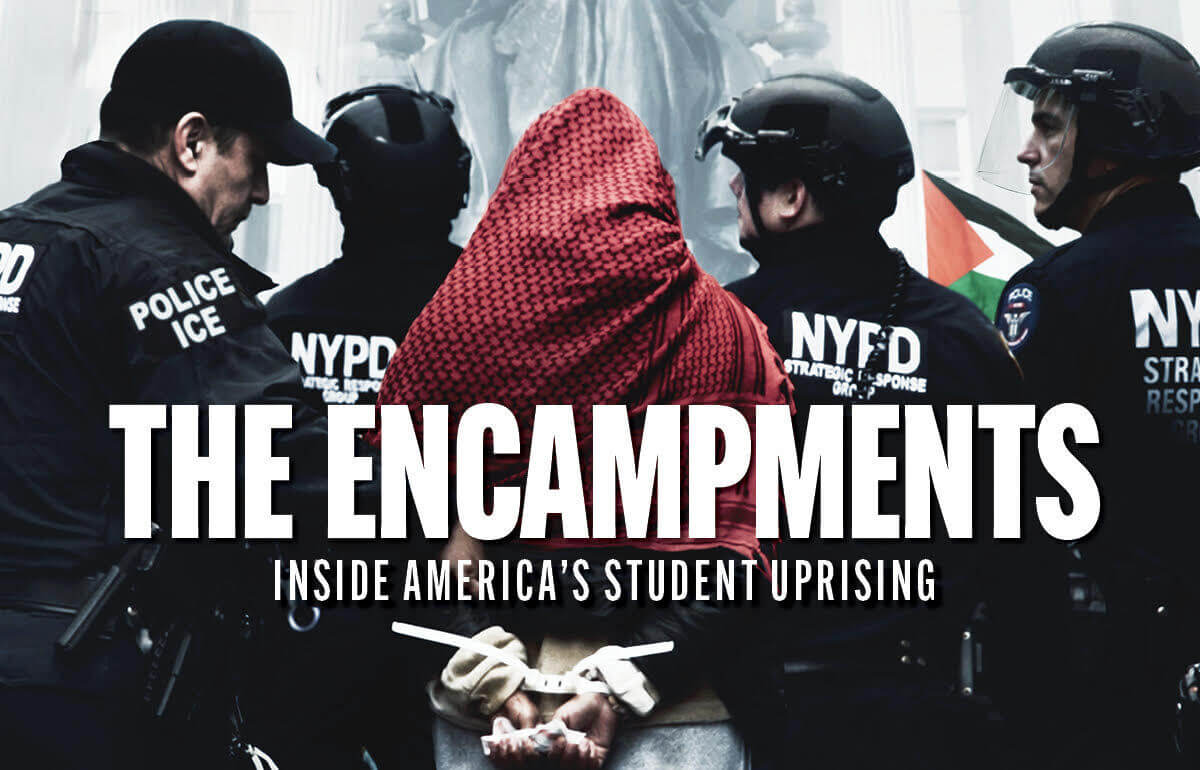
Filmed in real time from inside the 2024 Columbia student encampments, The Encampments offers a firsthand look at Palestinian and Jewish students joining in solidarity to protest Israel’s U.S.-backed destruction of Gaza and their own university’s investments in weapons manufacturers profiting from that destruction.
The documentary also reveals how mainstream news media and politicians helped portray the protests as antisemitic, extremist, and sympathetic to terrorism. Just as importantly, it exposes how university authorities helped legitimize these accusations and suppress student dissent, providing crucial context for the wider crackdown that followed: arrests, suspensions, expulsions, and the Trump administration’s detention of Palestinian student leader Mahmoud Khalil and efforts to deport him.
Using The Encampments in the Classroom
now available for educational use on our new streaming platform, gives students a chance to make up their own minds about the Columbia student protests, think critically about the political and media narratives used to justify the crackdown, and consider what’s at stake for free speech, academic freedom, and the right to dissent.
The result is an invaluable resource for courses in media studies, communication, political science, sociology, and history, as well as classes that examine U.S. foreign policy and war, Middle East issues, news media framing, government propaganda, civil rights, academic freedom, student activism, and the role of political dissent in democratic life.
The Encampments is also available as part of our new Premium Collection, which offers flexible subscription and permanent-access licensing options. To learn more about the MEF Premium Collection, contact Stephen Belcourt at [email protected].
1. Eyal Press, “A Whistle-Blower Speaks Out About Trump’s Crackdown on Campus Antisemitism,” The New Yorker, Nov. 13, 2026.

“The Encampments blew me away. One of the best docs I’ve seen in years.”
— Michael Moore, Filmmaker
“Indelible … Mahmoud Khalil is the bridge through which the film makes its arguments about the hypocrisy of élite liberal education, which feeds on ideals of free inquiry and free speech and abdicates its responsibility in freeing people.”
— The New Yorker
The Encampments lays bare what’s at stake: whether higher education will defend democratic principles or bow to authoritarian pressure at a moment when free speech on campus is under assault.”
— Sut Jhally | Professor Emeritus, UMass-Amherst & MEF Executive Director
“Gripping … That the use of a militarized police force on protesters has become so commonplace in the last decade should concern all Americans, especially as the Trump administration continues to act in ways that violate protected rights. The Encampments is not just critical in capturing the real-time makings of a movement, but in laying bare the consequences of this response.”
— The Hollywood Reporter
“Stirring and tense … a rousing documentary. The strength of the film is that it avoids getting caught up in polemics, instead focusing solely on the encampments and the people who led them … young, educated people [who] do not want to pay for the killing of Palestinians. The administration, however, is compromised: how can they agree to divest from companies whose representatives serve on the university board?”
— Sight & Sound
“The Encampments does a masterful job showing the full story of the Columbia encampment and the activism that preceded it. … [It] leaves viewers empowered — a welcome feeling as we witness the horrific and endless butchering of civilians and destruction of homes in Gaza.”
— Mondoweiss
An urgent protest film that carries the same conviction and resolve of the students who organized these demonstrations … As a snapshot of a particular few weeks in which a protest movement was born and spread, it’s an effective and prescient documentary.”
— Variety
“Necessary and urgent … A considered rejoinder to the hysterical mischaracterizations of the encampments as ridden with ‘radical,’ ‘extremist’ and ‘antisemitic’ elements.”
— Middle East Eye
“Immersive … One of the most important elements of the movie is its debunking of the public narrative about the actions and motivations of the protesters. … Far from divisive, it’s an inspiration to behold.”
— KQED, San Francisco, CA
“Rousing and reflective … artistically triumphant. … Not only is The Encampments keenly observational about the kind of detail and planning that goes into such movements, it also makes for an intimate aesthetic embodiment of what participating in a protest feels like, in all its hues.”
— IndieWire
“Offers undeniable food for thought.”
— The Times of London