LGBTQ TV representation is at a crossroads
Errin Haines, editor-at-large at The 19th, in a scene from Breaking the News. Photo: Heather Courtney
LGBTQ TV REPRESENTATION IS AT A CROSSROADS
GLAAD’s latest Where We Are on TV report, released late last year and covering the 2024–25 television season, told a sobering story about the state of LGBTQ representation on television.¹
The story was not that LGBTQ characters had disappeared from television. They hadn’t. The deeper warning was that visibility remained uneven, fragile, and vulnerable to reversal: more than 40 percent of the LGBTQ characters GLAAD counted were not expected to return the following season because of cancellations, endings, limited-series formats, or characters leaving their shows.
That warning is hard to miss today, amid continuing attacks on LGBTQ rights and visibility.² ³
All of this makes Katherine Sender’s acclaimed documentary Beyond the Straight and Narrow an especially powerful resource for educators right now.
In the film, Sender traces the remarkable progress that’s been made in LGBTQ representation on television while making clear how that progress can stall, narrow, or disappear when corporate caution, industry contraction, and organized political backlash converge.

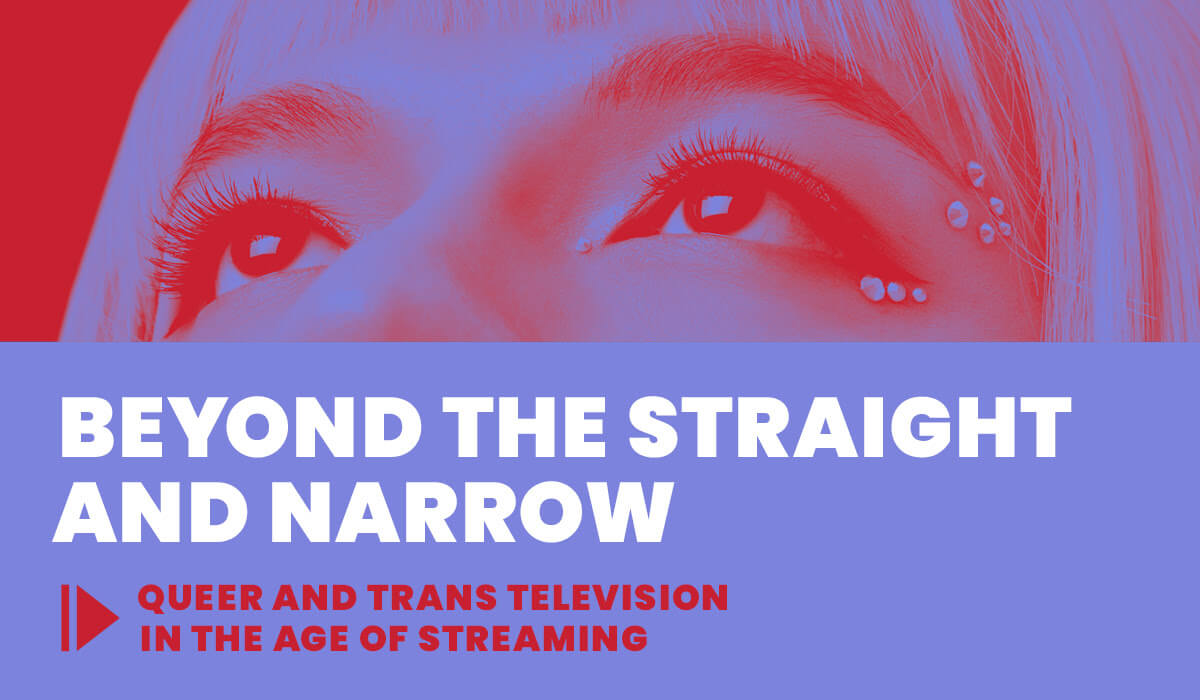
The latest installment in Sender’s groundbreaking series on LGBTQ television representations, Beyond the Straight and Narrow examines how television has changed since the advent of streaming. It explores the cultural, economic, political, and technological forces that have shaped the unprecedented range of queer and transgender images we see on television today. At the same time, it challenges the idea that visibility automatically translates into progress, showing how media representation is always shaped by power — by network and platform economics, corporate priorities, political pressure, and ongoing struggles over who gets to be seen, heard, and understood.
At a moment when LGBTQ visibility is both more widespread and more contested than ever, Beyond the Straight and Narrow gives educators a clear, engaging, and critically grounded way to help students examine the relationship between media representation, backlash, social change, and political power.
Beyond the Straight and Narrow is now available on our streaming platform in multiple formats. It’s also available as part of MEF’s Premium Collection, which offers flexible subscription and permanent-access licensing options. To learn more about the Premium Collection, contact Stephen Belcourt at [email protected].
1. Where We Are on TV 2024–2025, 20th edition, GLAAD, November 6, 2025.
2. “Why anti-transgender political ads are dominating the airwaves this election,” PBS NewsHour, November 2, 2024.
3. “4 states move anti-trans ballot measures to voters for 2026 midterm election,” by Christopher Wiggins, The Advocate, March 18, 2026.
PRAISE FOR BEYOND THE STRAIGHT AND NARROW
“The previous Straight and Narrow films established a gold standard for educational docs, and true to its title, Beyond the Straight and Narrow is even better. A wonderful addition to your classroom and/or viewing queue, it ranges across a huge number of LGBTQ+ representations with commanding brilliance, incisive commentary, and a refreshingly welcome focus on intersectional depictions.”
— Jonathan Gray | Hamel Family Distinguished Chair in Communication Arts, University of Wisconsin – Madison
“Beyond the Straight and Narrow does an excellent job of exploring how LGBTQ representation in [a] complex and ever-changing world has often shifted for the better, and how it is at once empowering and yet still so fragile across multiple media domains.”
— Yasmin Nair | Writer, Activist, Academic, and co-founder of the radical queer editorial collective Against Equality
“Beautifully explains how mainstream media functions, and for whom. If you want to genuinely, accurately understand queer images today watch [this film].”
— Michael Bronski | Professor of the Practice in Activism and Media Studies of Women, Gender and Sexuality at Harvard University and author of A Queer History of the United States
“Richly entertaining as well as informative, Beyond the Straight and Narrow weaves together a complicated account of progress and remaining limitations.”
— Amanda Lotz | Professor at Queensland University and author of The Television Will Be Revolutionized
“Nuanced … Makes clear that we cannot assume that mainstream representation of LGBTQ people simply improves over time or that we can take any gains seen for granted.”
— Adrienne Shaw | Associate Professor of Media Studies and Production at Temple University
“Offers an outstanding compendium of television and streaming shows featuring queer, bisexual, gay, lesbian, trans and nonbinary characters and content, accessibly framed by experts in queer media studies….Will be of great use to secondary school educators as well as those in media studies and LGBTQ+ studies at more advanced levels.”
— Finn Enke | Professor of Gender and Women’s Studies, History, LGBTQ+ Studies at University of Wisconsin, Madison
“Taking us on a journey through fictional dramas, reality shows, children’s cartoons, web series, and telenovelas, Beyond the Straight and Narrow proceeds with hope and caution to offer an absorbing take on the complex historical development.”
— Lukas Szulc | Senior Lecturer in Digital Media and Culture at the University of Manchester
“Television, historically so suppressive of and hostile towards LGBTQ representations, is now swimming with them. Compelling and entertaining, Beyond the Straight and Narrow offers a clear-eyed, smart, and nuanced account of how we got here and why it matters.”
— Joshua Gamson | Professor of Sociology at University of San Francisco and author of Freaks Talk Back: Tabloid Talk Shows and Sexual Nonconformity