The Cornell case: What every campus should be asking
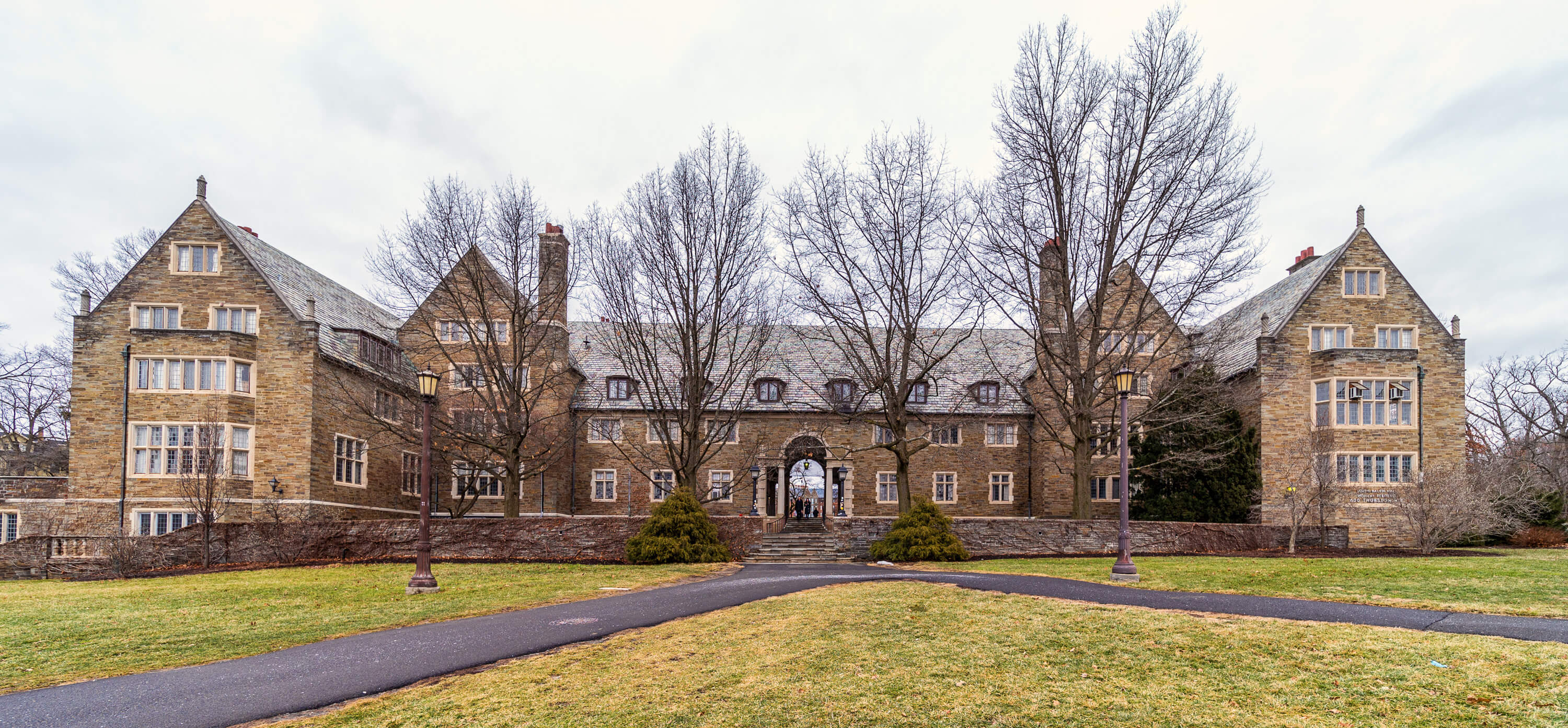
Balch Hall, Cornell University. Photo: Kenneth C. Zirkel, Wikicommons, CC BY-SA 4.0.
WHAT THE CORNELL CASE FORCES US TO ASK
The shocking allegations in the Cornell case raise urgent questions about peer cultures, bystander silence, institutional responsibility, and what it takes to prevent sexual violence.
On September 16, a former Cornell student filed a civil lawsuit that brought a previously little-known case into national view. She alleges that she was coerced into taking ketamine and sexually assaulted by seven men at the Chi Phi fraternity house in October 2024.
According to records obtained by The New York Times, in the weeks that followed she reported the incident to Cornell University Police, requested a rape kit at an Ithaca emergency room, and filed a Title IX complaint.¹
Cornell says its Title IX process ultimately resulted in sanctions including suspensions and expulsions, while prosecutors declined at the time to bring criminal charges.²
Now, nearly two years later, the civil lawsuit has brought renewed attention to the case, including an alleged fraternity Snapchat message urging other members to join what the lawsuit describes as an ongoing gang rape. In turn, both Cornell’s handling of the case and the initial criminal investigation have come under intense scrutiny, prompting Cornell to agree to an independent review of its initial response and the Tompkins County District Attorney to reopen the criminal investigation and announce plans to present the case to a grand jury.³
The investigation remains ongoing. But the larger questions this case has brought into public view reach far beyond Cornell. Among them:
- What happens inside male peer cultures when dehumanizing attitudes toward women are normalized?
- What makes some young men participate, others remain silent, and others step forward?
- How does silence itself become embedded in peer cultures and institutions?
- What responsibilities do institutions have beyond responding after harm has occurred?
- And what kind of leadership is required to challenge the attitudes and group dynamics that allow sexual violence to flourish in the first place?
The bottom line is that neither sexual violence nor silence occurs in a cultural vacuum. And because both are shaped and reinforced by the cultures around us, education has a critical role to play in changing those cultures.
To explore what that means in practice, we reached out yesterday to Jackson Katz, a longtime leader in the gender violence prevention field whose work is at the heart of our documentary The Bystander Moment: Transforming Rape Culture at its Roots. He told us that effective education with young men has to go well beyond basic lessons about consent.
“We’ve known for a long time what works best when it comes to anti-rape education for young men,” Katz said. “It’s not just about teaching them the meaning of consent. We also need to provide them with structured opportunities to discuss these issues not only with ‘experts,’ but also with each other. That means making space for honest, robust dialogue about masculinity, entitlement, the impact of the misogynous manosphere, porn, and other media on their understanding of sex and power, and the pressures young men face to conform to masculinity norms that are deeply harmful to women and to men themselves.”
The larger obstacle, Katz told us, is getting educational institutions to make this kind of work a priority.
“We could be doing so much better,” he said, “and we could be preventing so many unnecessary tragedies if this kind of educational practice were institutionalized and we started appealing to young men as potential leaders on these issues rather than just potential perpetrators. It’s disappointing — disgraceful, really — that this still hasn’t happened on a large scale.”
It’s precisely this focus on culture, leadership, and prevention that drives The Bystander Moment and makes the film feel especially urgent right now.
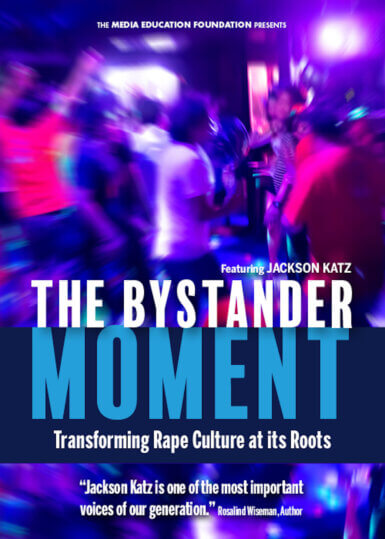

In The Bystander Moment, Katz challenges one of the most persistent ways we think about sexual violence: as a problem involving individual perpetrators and individual victims rather than a larger cultural problem that implicates peer groups, institutions, and all of us.
As he shows in the film, widening the lens doesn’t diminish the responsibility of perpetrators. Instead, it expands the questions we need to ask, moving us from simply “Why did he do it?” to “What’s going on around him that helps make this behavior possible, and what can the rest of us do to change it?”
The Bystander Moment takes those questions directly into the cultural arenas where attitudes about masculinity, sex, power, and violence are formed and reinforced, from media and pornography to sports and peer groups.
In the film, Katz:
- Shows how male peer cultures can normalize sexist and abusive behavior and create powerful pressures to participate, go along, laugh along, or remain silent.
- Traces how media, social media, pornography, and sports culture can reinforce damaging ideas about masculinity, sexual entitlement, and dominance while helping to normalize sexism, misogyny, and men’s violence against women.
- Examines the role of bystanders, showing how people who are neither perpetrators nor victims can interrupt abusive behavior and challenge the norms that sustain it.
- Reframes prevention and intervention as leadership issues, especially for men and young men who have enormous power to influence the attitudes and behavior of other men.
- Moves the conversation from punishment to prevention, asking not simply what should happen after violence occurs, but what schools, athletic programs, fraternities, workplaces, and communities can do to help prevent it in the first place.
Whatever facts are ultimately established in the Cornell case, the larger issues now coming into focus extend far beyond one fraternity or one university. Every campus in the country needs to be asking what more it can do to cultivate leadership on these issues and prevent sexual violence before it happens.
The Bystander Moment gives educators, campus leaders, and students a powerful framework for doing exactly that. It challenges institutions to examine the cultures they create and tolerate while empowering students, especially young men, to show the leadership and courage needed to speak up, influence their peers, and help transform those cultures from within.
HOW TO GET THE FILM
The Bystander Moment is now available in multiple formats on our new streaming platform. Through the end of October, save 15% on the film and all other titles in our Gender Violence Prevention Collection with the code DVAM2026.
FREE DISCUSSION GUIDE FOR EDUCATORS
To support teaching and screenings, and to facilitate dialogue, we’ve created a free discussion guide to accompany The Bystander Moment. It includes questions, prompts, and activities designed for classrooms, libraries, campus programs, and community screenings. Download the discussion guide here.
BOOK A SCREENING
If you book a screening by October 31, you’ll receive 15% off with the code DVAM2026. Click here to set up a screening.
—-
¹ “Cornell Denies That Defendants in Alleged Chi Phi Gang Rape Only Wrote Essays, Confirms Expulsions,” by Mary Caitlin Cronin and Varsha Bhargava, The Cornell Daily Sun, September 28, 2026.
² “Prosecutors reopen investigation into alleged 2024 gang rape at Cornell University,” by Joseph Ax, Reuters, September 28, 2026.
3. “Alleged Cornell gang rape prompts calls to revise New York sexual assault laws,” by Joseph Ax, Reuters, October 1, 2026.
Praise for THE BYSTANDER MOMENT
“A must-see documentary. Urgent and timely. Jackson Katz’s voice, intellectual firepower, and cutting-edge cultural critique offer us real tools to transform rape culture at its roots. I’ve screened The Bystander Moment in my class at Harvard Law and intend to show it every semester moving forward!”
— Diane L. Rosenfeld, JD, LLM, Founding Director of the Gender Violence Program and Lecturer on Law at Harvard Law School
“The Bystander Moment sets itself apart in its honest approach and its commitment to tackling the root causes of violence. It moves away from the ‘rape whistle’ style of prevention education, which only teaches skills to intervene right before an act of violence occurs, and seeks to stop violence at its core by addressing problematic cultural norms. The advocates and educators we work with will benefit immensely from this resource.”
— Amanda Grady Sexton, Director of Public Affairs for the New Hampshire Coalition Against Domestic and Sexual Violence
“The Bystander Moment is a powerful call to action … Jackson Katz, the world’s foremost educator and thought leader on men’s roles in ending violence against women, provides an eloquent, passionate, and accessible account of how to transform the culture that produces abusive behavior … An invaluable teaching tool … rich with contemporary examples, points for discussion, and evidence-based insight … grounded in the best scholarship and practice in the field.”
— Michael Flood, Ph.D., Author of Engaging Men and Boys in Violence Prevention
“The Bystander Moment is a terrific, timely, and necessary video. Longtime pro-feminist activist and cultural critic Jackson Katz powerfully demonstrates that silence is a form of complicity, and passionately and expertly illustrates how and why we must transform rape culture. This video needs to be screened in classrooms and communities far and wide.”
— Jean Kilbourne, Ed.D., creator of the award-winning Killing Us Softly video series
“Rape culture isn’t going to disappear on its own. Resistance takes courage, thought, and practice. The Bystander Moment invites us to dig into the social roots of sexual and domestic violence and to consider what each of us can do to challenge the words and behaviors that normalize oppression. This film is an empowering contribution.”
— Kristin L. Anderson, Ph.D. Professor of Sociology, Western Washington University
“Feminists have long asked men not only to listen to women, but also to not be afraid to challenge other men’s sexism. The Bystander Moment is a great example of how we can do just that. … Hats off, once again, to the Media Education Foundation for making another film that speaks to our struggle to create a safer and saner world.”
—Dr. Robert Jensen, Emeritus Professor, School of Journalism, University of Texas at Austin, author of The End of Patriarchy: Radical Feminism for Men
“The Bystander Moment is more than an analysis of the causes and consequences of sexual assault; it is a wise and passionate beacon for engaged activism in colleges, sports, the military and workplaces to end the longstanding partnership of gender inequality and gender-based violence.”
— Michael A. Messner, Ph.D., University of Southern California, Co-author, Some Men: Feminist Allies and the Movement to End Violence Against Women
“The Bystander Moment is a great documentary film. It unpacks how we’re all bystanders, and often silent observers/contributors, to the pervasive culture of rape in our society. With examples of various sectors taking action, from sports to military, the film emphasizes that we all have a role to play in reshaping social norms in our communities.”
— Alisha Somji, MPH, Associate Program Manager at the Prevention Institute