From campus protest to political power

A POLITICAL SHIFT YEARS IN THE MAKING
Acclaimed documentary shows how this moment took shape
Two years ago, the student encampments were treated as a threat.
Students protesting U.S. support for Israel’s war on Gaza were smeared as dangerous, extreme, naïve, antisemitic, and politically radioactive. Politicians in both parties lined up to condemn them. University leaders called in police. And mainstream media coverage turned their legitimate demands into a story about disorder, hate, and campus unrest.
Over the past week and a half, Democratic primary victories by candidates challenging the old consensus on Israel have told a very different story.¹
Three candidates who campaigned forcefully for Palestinian rights and an end to unconditional U.S. military support for Israel won major congressional primaries across New York City. And this week in Colorado, another candidate running on a similar message unseated a longtime incumbent, reflecting a broader national shift in attitudes toward Israel’s war on Gaza.
In one of the clearest signs of how much has changed, one of the three winners was a Columbia alumna who helped organize the student encampment movement that both major parties worked so hard to discredit — a striking reminder that positions once treated as disqualifying are now becoming sources of political strength.
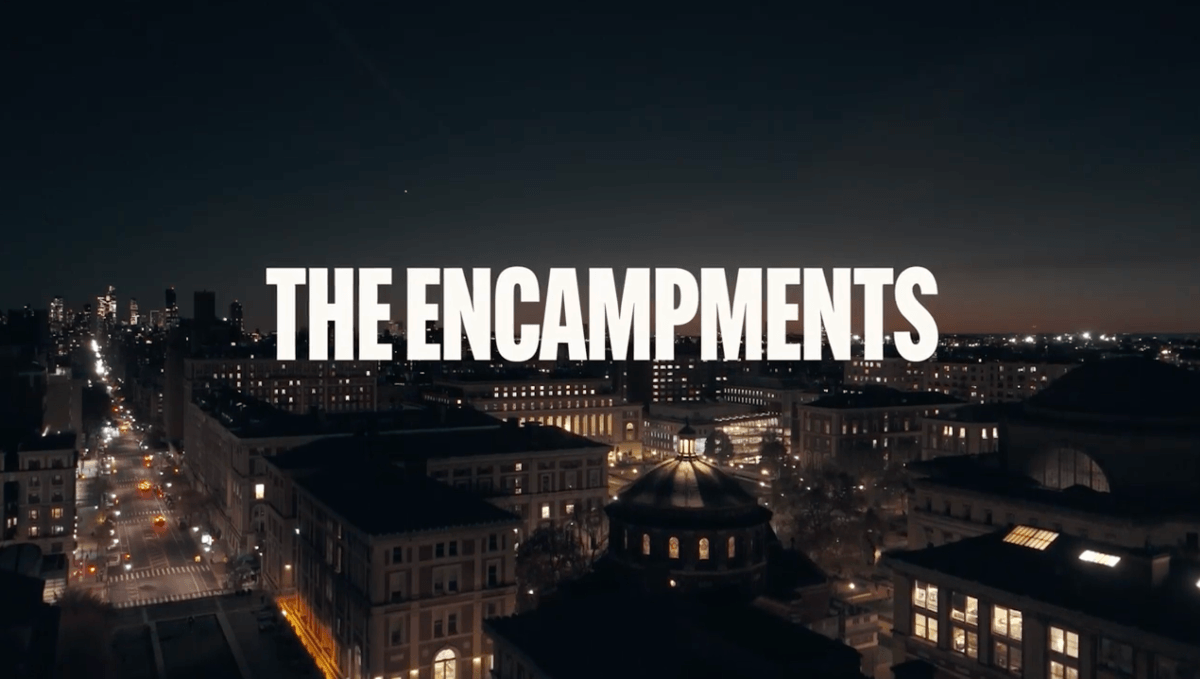
That’s what makes the acclaimed documentary The Encampments such a vital educational tool right now.
The film takes viewers inside the Columbia encampments as they unfolded in real time, following Palestinian and Jewish students as they organized in solidarity, challenged institutional power, and faced intense backlash from university leaders, political officials, and mainstream media. What emerges is not simply a record of protest before the old political consensus began to crack, but a riveting and immersive case study in how dissent often gets vilified and punished before being vindicated.
For educators and students, The Encampments opens space for timely conversations about war, media framing, academic freedom, political repression, generational change, and the role of free speech and debate in democratic life.
Learn more about adding The Encampments to your collection or courses.
1. “Gaza Is Costing Democratic Incumbents Their Seats,” by Sophie Hurwitz, Mother Jones, June 30, 2026.
PRAISE FOR THE ENCAMPMENTS
“The Encampments blew me away. One of the best docs I’ve seen in years.”
— Michael Moore, Filmmaker
“Indelible … Mahmoud Khalil is the bridge through which the film makes its arguments about the hypocrisy of élite liberal education, which feeds on ideals of free inquiry and free speech and abdicates its responsibility in freeing people.”
— The New Yorker
“The Encampments lays bare what’s at stake: whether higher education will defend democratic principles or bow to authoritarian pressure at a moment when free speech on campus is under assault..”
— Sut Jhally | Professor Emeritus, UMass-Amherst & MEF Executive Director
“Gripping … That the use of a militarized police force on protesters has become so commonplace in the last decade should concern all Americans, especially as the Trump administration continues to act in ways that violate protected rights. The Encampments is not just critical in capturing the real-time makings of a movement, but in laying bare the consequences of this response.”
— The Hollywood Reporter
“Stirring and tense … a rousing documentary. The strength of the film is that it avoids getting caught up in polemics, instead focusing solely on the encampments and the people who led them … young, educated people [who] do not want to pay for the killing of Palestinians. The administration, however, is compromised: how can they agree to divest from companies whose representatives serve on the university board?”
— Sight & Sound
“The Encampments does a masterful job showing the full story of the Columbia encampment and the activism that preceded it. … [It] leaves viewers empowered — a welcome feeling as we witness the horrific and endless butchering of civilians and destruction of homes in Gaza.”
— Mondoweiss
“An urgent protest film that carries the same conviction and resolve of the students who organized these demonstrations … As a snapshot of a particular few weeks in which a protest movement was born and spread, it’s an effective and prescient documentary.”
— Variety
“Necessary and urgent … A considered rejoinder to the hysterical mischaracterizations of the encampments as ridden with ‘radical,’ ‘extremist’ and ‘antisemitic’ elements.”
— Middle East Eye
“Immersive … One of the most important elements of the movie is its debunking of the public narrative about the actions and motivations of the protesters. … Far from divisive, it’s an inspiration to behold.”
— KQED, San Francisco, CA
“Rousing and reflective … artistically triumphant. … Not only is The Encampments keenly observational about the kind of detail and planning that goes into such movements, it also makes for an intimate aesthetic embodiment of what participating in a protest feels like, in all its hues.”
— IndieWire