Why is women’s health still treated as niche news?
SHOULD WOMEN’S HEALTH BE NICHE NEWS?
New Film Follows a News Outlet Flipping the Script
About 6,000 women enter menopause every day, yet the subject has long received far less sustained journalistic attention than its impact would suggest. ¹
Earlier this year, the acclaimed independent news outlet The 19th launched a dedicated menopause project to help close that gap.² Rather than treating menopause mainly as a lifestyle or wellness story, its reporting has connected women’s midlife health to workplace policy, insurance coverage, medical research, racial inequality, aging, and access to care.
That broader lens has been central to The 19th’s journalism since its launch six years ago. By design, its reporting has treated gender not as a niche subject, but as something that cuts across politics, economics, health care, race, work, sexuality, and power, with an explicit commitment to women and LGBTQ+ people too often overlooked by mainstream journalism.
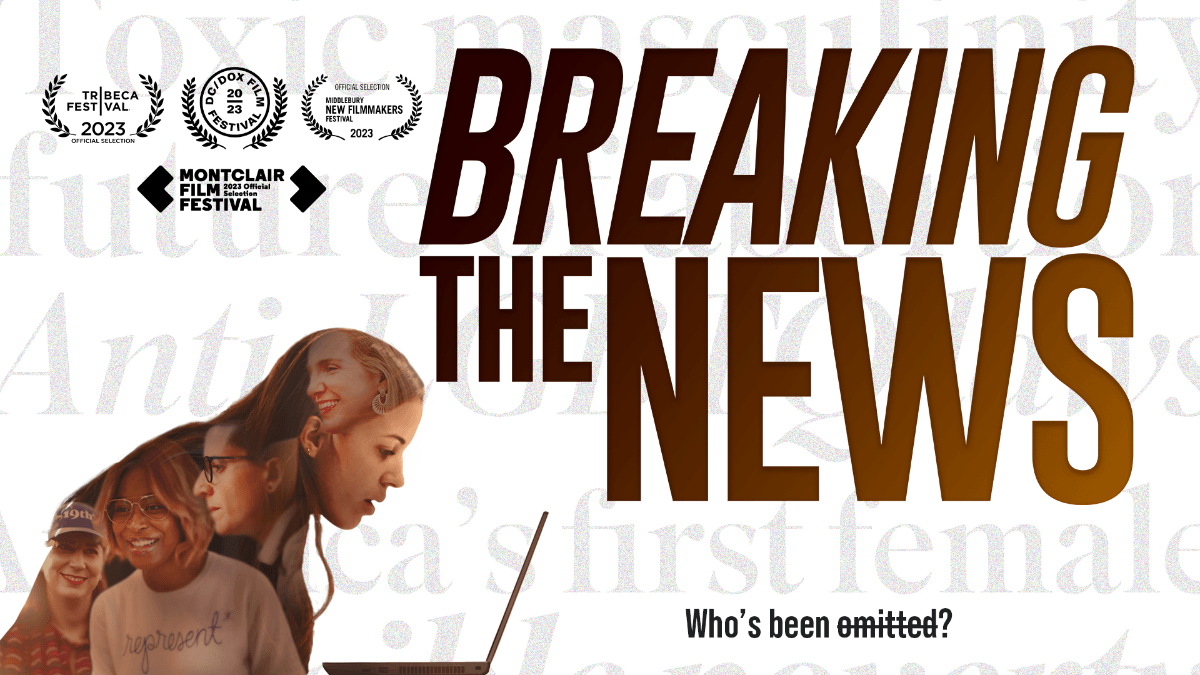
Our new release Breaking the News tells the story of how The 19th set out to build a newsroom around that broader vision of journalism.
The award-winning documentary follows the media start-up’s launch in 2020 as its founders create an independent, nonprofit newsroom devoted to covering gender, politics, policy, and power. Set against the pandemic, the presidential election, and a nationwide reckoning over race, the film follows the founders and the diverse group of women and LGBTQ+ journalists who join them as they work to broaden what political journalism pays attention to and whose experiences it takes seriously.
Breaking the News is an invaluable classroom resource at a time of extraordinary upheaval in American journalism. By taking students inside the launch of an independent newsroom, the film gives them a rare look at how editorial priorities are set, which stories get pursued, and whose experiences are treated as newsworthy. It also opens up discussion about how race, gender, class, and concentrations of corporate and oligarchic money and power shape newsroom decisions and influence the kind of reporting that reaches the public.
Breaking the News is now available in multiple formats on our new streaming platform.
It’s also available as part of our new Premium Collection, which offers flexible subscription and permanent-access licensing options. To learn more about the MEF Premium Collection, contact Stephen Belcourt at [email protected].
¹ “About — Menopause, by The 19th,” The 19th, 2026.
² The 19th takes its name from the constitutional amendment guaranteeing women’s suffrage. Its logo adds an asterisk to acknowledge that the amendment enfranchised White women while leaving women of color disenfranchised for decades, and to reflect the outlet’s ongoing commitment to women and LGBTQ+ people still fighting to be seen and heard in American democracy.
PRAISE FOR BREAKING THE NEWS
“Breaking the News is a must-see documentary for anyone who works in journalism or is studying to get into the field. The 19th*’s unique rise to independent newsroom fame is one for the history books, and the experiences of the editors and journalists contained within will be endlessly valuable to people who want to make changes in the field.”
—Video Librarian
“Breaking the News is an immersive, crowd-pleasing, candid portrait of a start-up [news agency] experiencing growing pains, roadblocks, and ultimately success in changing the paradigm and business model for news. … One of those rare films that, like Citizenfour, might be seen as a major landmark in cinéma vérité documentaries about journalism.”
—John Fink, The Film Stage
“A scrappy group of women and LGBTQ+ journalists buck the white male-dominated status quo, banding together to launch The 19th*, a digital news startup aiming to combat misinformation. A story of an America in flux, and the voices often left out of the narrative, the documentary Breaking the News shows change doesn’t come easy.”
—PBS, Independent Lens
“This high-stakes documentary … looks poised to join the pantheon of great newsroom docs.”
—International Documentary Association