


















George Gerbner Series
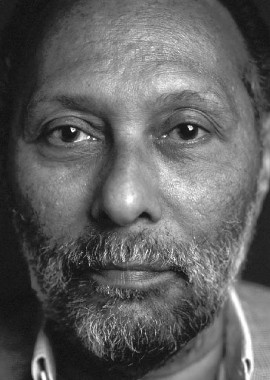
Dr. George Gerbner is Bell Atlantic
Professor of Telecommunication at Temple University, Dean Emeritus of the
Annenberg School of Communication at the University of Pennsylvania, Director
of the Cultural Indicators research project, and Founder and Director of the
Cultural Environment Movement. From 1964 to 1989 he was Professor and Dean of
The Annenberg School for Communication, University of Pennsylvania. He was
editor of the Journal of Communication and chair of the editorial board of the
International Encyclopedia of Communication. His recent publications include
The Global Media Debate: Its Rise, Fall and Renewal (Ablex, 1993); Triumph of
the Image: The Media's War in the Persian Gulf. A Global Perspective (Westview,
1992) and "Television Violence; the Power and the Peril." In Gail
Dines and Jean M. Humez (eds.), Gender, Race and Class in the Media: A Critical
Text-Reader (Sage, 1995).
Professor Gerbner, in 1990, launched
a "Cultural Environmental Movement" (see Part III of this study guide) whose
broad aims are to support media education, work for democratic media reform,
place cultural issues on the sociopolitical agenda, and develop ways of
participation in local, national and international cultural policy-making.
The Gerbner Series Study Guide is
intended for educational and nonprofit use only. It is designed as a resource
supplement to the three-video series featuring Dr. George Gerbner: The Killing Screens, The Electronic Storyteller, & The Crisis of the Cultural Environment. Please feel free to print and distribute this study guide for
classroom and community service instruction. Any questions or concerns about
this guide or the Gerbner videos should be directed to the Media Education
Foundation, 26 Center Street, Northampton, MA 01060, Tel: (413) 584-8500, Fax:
(413) 586-8389, Email: mediaed@mediaed.org.
Table of Contents
Part I: The
Electronic Storyteller: Television and the Cultivation of Values
Part II: The
Killing Screens: Media and the Culture of Violence
Part III: The
Crisis of the Cultural Environment: Media and Democracy in the 21st Century
Part I :
The Electronic Storyteller
TV As Storyteller
By Dr. George Gerbner
Before we can fully examine the consequences of media violence, we
need to understand how television defines our cultural environment by acting as
a modern-day storyteller. Here, Professor Gerbner discusses the historical role
of storytelling as communication and points out the consequences involved when
those who tell the most stories are corporations with something to sell.
Human beings are unique to other
species in that we live in a world that is created by the stories we tell. Most
of what we know, or think we know, we have never personally experienced; we
learned about it through stories. For all practical purposes, there are three
kinds of stories which construct the world in which we live.
First, there are stories about how
things work. The dynamics of human life are often hidden from view. Fictional
stories - dramas, fairy tales, television programs, movies, or novels - take us
behind the scenes to reveal these dynamics and illuminate to us how the systems
which govern how the world works. They build a fantasy we call reality.
Second, there are stories that
confirm and elaborate upon reality. These are stories about the way things are:
legends about the past, news, or scientific information. Such stories tend to
confirm rather than undermine the rules and goals of any given society.
The third kind of story is one of
value and choice. Such stories tell us, "If this is how things work, and
if this is how things are, these are the choices and this is what I think you
ought to do about them." Such stories include sermons, instructions, and
commercials. Today, commercials are the main stories that tell us what we
should do and what we should buy.
All three types of stories have been
woven together throughout the history of human kind in a seamless web we call
culture. Culture is the set of stories that tell us about the nature of the
universe, how it is created and run, and the right and wrong modes of conduct
within a particular time, place, and society. This fundamental storytelling
process, however, has undergone certain key transformations.
For a very long time, storytelling
was exclusively face-to-face: people responded to, and interacted with, the
primary communication process. Oral storytelling originated in tribal
societies. In the days of "pre-literacy," storytelling and rituals
enabled people to remember and celebrate their common culture. Storytelling was
adjustable, responsive and participatory: entire communities participated in
the storytelling process, and the right of passage was the transition from
being a listener of stories to being an actor or teller who could then
socialize other people in the same community.
All of this changed with the arrival
of the printing press. Print allowed storytelling to be mobile instead of
rooted in tribal communities, and it was in many ways the prerequisite for the
industrial revolution. For the first time, it was possible to record communication
and deliver stories to people that one didn't know. This made it possible for
common consciousness and what is know in social theory as "mass
public." A modern mass public is a very large aggregation of people who
have very little in common except the stories they exchange.
This shift has had profound
consequences. Print meant that the interpreter of the tribe or community was no
longer needed. It was now possible to print many of the stories, including
different kinds of stories in the same society as the division of classes,
regions, religions, and ethnic groups became a reality.
A big question arose. How
could people tell stories that addressed all the different interests of a
society? How could stories of life be told that address the interests of
conflicting and competing classes, who see the world very differently? The
answer to that is what we now call "freedom of the press." To the
extent that freedom of the press became a reality, it is now possible for
people of different perspectives to tell stories from their own points of view,
although such freedom requires continued struggle.
Print-based culture is still the
basis for many of our assumptions about education, religion, and government.
But something has overwhelmed and transformed that culture: the electronic
revolution. While this transformation encompasses many new technologies,
including film and radio, the mainstream of the new cultural environment is
television. Television is now the mainstream of the new cultural environment,
and likely will be so for a very long time.
The television revolution
re-tribalized storytelling. Television has more to do with pre-industrial
tribal religion than it has to do with print. Television, for many reasons, is
really unlike any mass medium thus far. First of all, television, like
pre-industrial tribal, is essentially ritualistic. Most people watch not by the
program but by the clock. Television fits into a style of life. Around the
world, most people watch a great deal of television. Most people grow up in,
and participate in a television culture.
What does this mean? Consider that
for the first time in human history a child is born into a home in which
television is on an average of about seven hours a day. And for the first time
in human history most stories are told not by the parent, not by the school,
not by the church, not by the tribes or community, and in many places not even
by the native country, but by a relatively small group of conglomerates who
have something to sell.
When storytelling is linked to the
selling of a product of service, it changes in a fundamental way. In addition
to communication, there is an ulterior motive, a second agenda. This produces
changes in the environment in which we grow up and are socialized. It means
that today, a ten year-old child remembers more brands of beer than American
presidents, and more children recognize "Old Camel Joe" from the
Camel cigarette commercials than recognize Mickey Mouse. It means that we live
in a very different cultural environment from before.
That different world has great
attractions. People who used to be outside the cultural mainstream can now
participate in the common television culture. Today, it is possible for all
people to share in a culture that only rich people used to have. For the first
time in history, the rich and the poor, the cosmopolitan and the isolated, the
very young and the very old share a great deal of cultural imagery in common,
although none of it is their own making. For many people, the cultural horizon
of television is very attractive, especially compared to other things they
might be doing.
We need to respect that choice. The
question is not whether or not people watch television, because they are likely
to do so no matter what we say about the subject. The issue we need to be
concerned with is what kind of world people enter when they are born into the
culture of television. What kind of world it is that television, our primary
storyteller, brings into every home?
The Cultural Indicators Projects is a database and an ongoing
research project that relates recurrent features of the world of television to
viewer conceptions of reality. It's cumulative computer archive contains
observations on 2,816 programs and 34,882 characters coded according to many
thematic, demographic and action categories. The project is conducted by Dr.
George Gerbner in collaboration with Dr. Michael Morgan at the University of
Massachusetts at Amherst, Dr. Nancy Signorielli at the University of Delaware,
Dr. Larry Gross at the Annenberg School for Communication at the University of
Pennsylvania, and Dr. James Shanahan at Cornell University.
The Distorted World of Television
For a more in-depth discussion of this study by George Gerbner,
please see the article Casting and Fate: Women And
Minorities On Television Drama, Game Shows, and News.
Casting and fate are the basic
building blocks of storytelling. Casting the symbolic world defines the pool of
human characterization from which stories and images are drawn. Who are the
characters who populate the world of television? How are women and minorities
(seniors, radical and ethnic groups, poor and disabled persons) represented?
Based on the analysis of 19,642
speaking parts appearing in 1,371 television programs, we found that despite
changes in styles, stars, and formats, television presents a remarkable stable
cast. According to out findings:
* Women compromise one-third or less of the characters on television
except in daytime soap operas (45.5 percent) and game shows (55.3 percent).
* While all seniors are greatly underrepresented on television,
visibly old people are almost invisible (less than 3 percent) on television.
* On major network prime time programs, African Americans compromise
only 10.8 percent of characters.
* Latino/Hispanic characters are rarely seen. Only in game shows do
they rise significantly above one percent representation.
* Although U.S. census classifies more than 13 percent of the
population as "poor", and many more as low-income wage earners, on
network television they make up only 1.3 percent of major characters in prime
time, half that (0.6 percent) in children's programs, and 0.2 percent in the
news.
* Physical disability is portrayed in only 1.5 percent of major
characters in prime time television.
* Women tend to be concentrated in younger age groups than men.
* Women are almost twice as likely to play the role of wife as men
are to play the role of husband.
* The population of prime time television is overwhelmingly (9 out
of 19 characters) middle class.
"Fate" is the evaluation
of characters as "good" or "bad" and the outcome
(successful or unsuccessful) for which they are destined. In our study we found
that television presents a preordained world where villains are disproportionately
poor and people of color, and where men have a much greater chance of success
than women. According to our findings:
* For every 100 heroes in prime time there are 43 villains.
* Villains are disproportionately male, lower class, young,
Latino/Hispanic and foreign (or at least not identifiable American).
* Mother figures in leading roles - married, elderly settled women -
and major African-American female characters, few as they are, are among the
most wicked characters.
* Boys and elderly men have a much higher ratio of success than
girls or elderly women.
* To be cast as a major female character in prime time who is old,
unmarried, ill or poor carries a disproportionately high risk of failure.
Minorities are made, not born.
Gender, race, class, ethnicity, age and disability define society's power
structure. Their portrayals affect how we see ourselves and each other. Our
findings suggest that the world of television seems to be frozen in a time-warp
of obsolete and damaging representations.
--From "Women and Minorities on
Television," a 1993 study by the Cultural Indicators research team at the
University of Pennsylvania's Annenberg School for Communication. The study was
commissioned by the Screen Actors Guild and the American Federation of Television
and Radio Artists.
Suggested
Discussion Questions
1. What is different about television and its impact on culture than
other media in earlier periods of history?
2. What is the difference between the "cultivation"
approach to analyzing the effects of television viewing and other notions of
how the medium affects people?
3. Why, as Gerbner's studies show, do you think people who watch a
lot of television tend to see the world as a meaner and scarier place than do
people who watch less TV?
4. How does heavy television viewing affect people's willingness to
vote for a woman for president? Why do you think it has that effect?
5. Do you think it is fair that older men (as opposed to older women)
are cast as sexually active, but usually opposite women half their age? Why do
you think that happens?
6. Thinking of your parents, relatives, and neighbors, list 10
occupations held by people you know. How does that compare with the percentage
of TV characters who are police officers, criminals, doctors, and lawyers?
7. In what ways does Dr. Gerbner think that casting and the emphasis
on violence affect our society's ways of thinking about crime policy, welfare
policy, and civil rights?
8. Where do you think you and your peers have gotten most of your ideas
about fashion, music, sex, race, and social issues like crime and poverty?
9. Do you think Dr. Gerbner's studies give television too much or not
enough credit for shaping the way we think about ourselves and the world?
10. How many hours of TV do you watch a day? In light of this video,
do you think you and others in your family watch TV too much, too little, or
just about the right amount? Have you ever tried turning TV off for a week? If
so, what did you do instead?
Rethinking Media Violence
By Dr. George Gerbner
This is an adaptation of a longer article by Dr. Gerbner in Mass
Communication Research: On Problems and Policies (Ablex, 1994). In this
article, Dr. Gerbner traces debates over the effects of popular culture from
the time of Socrates onwards, providing historical context for today's debates
over media violence. Looking specifically at the limitations of media research
on the topic, he argues that a focus on aggression and imitative, "copycat"
crime often masks policy issues and social concerns related to violence. The
main problem with media violence, says Gerbner, is that it promotes widespread
feelings of vulnerability and fear, often at the expense of women and
minorities, in the interests of corporate control and profit.
Charges of speech corrupting the
young and innocent have been heard in the Western world at least since the time
of Socrates. The rise of print, the spread of media to the "lower"
classes, and every new extension to those presumed to be more vulnerable than
their elders and betters sent the charge echoing through ruling circles and the
academy.
Cheap literature in the late 19th
century was blamed for making workers lazy and indolent. In his Ladies Guide,
published in 1882, J.H. Kellog railed against the "pernicious habit of
reading fiction which, once thoroughly fixed, becomes as inveterate as the use
of liquor or opium" and "is one of the greatest causes of uterine
disease" and other painful maladies. Immortality and violence in comics
and movies generated new fears, codes, regulations, and the first large-scale
media research project, the Payne Fund Studies of the 1930s.
The rise of television in the United
States coincided with post-World War II social ferment and concern about juvenile
delinquency, crime, and general unrest. A series of Congressional hearings
heard the traditional charges and denials of media violence focusing on
television for the first time. Subsequent hearings, commissions, and reports
energized citizens' movements for greater public participation in broadcasting,
and provoked a fierce backlash. The ensuing debate paved the way for the great
retreat of the 1980s.
But the received arguments of the
popular culture debate failed to illuminate the new problems of the television
age. A global sea-change in the symbolic environment has overtaken the old
parochial foundation of the issues. The collapse of the reform movement exposed
the bankruptcy of the traditional terms and tactics of the debate.
The "Media Violence" Story
Research on the consequences of
exposure to mass-mediated violence has a long and involved history. Most of it
focused on limited aspects of the complex scenario, It has been motivated (and
dominated) by charges of individual imitation, incitation, brutalization, or
subversion. Research has concentrated on the observable and measurable
psychological traits and states -- such as aggressiveness -- that were presumed
to lead to violence and could be attributed to media exposure.
Research on aggression has been the
most prominent "media violence story." Although ostensibly critical
of the media, it may have been the preferred story because it is the easiest to
neutralize and the least damaging to basic instructional interests and policies.
Aggressiveness is an ambivalent
concept with positive as well as negative connotations. It is a traditional
part of male role socialization. Its link to most real violence and crime,
which is organized and systemic, is tenuous, to say the least. It can even be
argued that too many people submit too meekly to exploitation, injustice,
indignity, and intimidation.
Approaches that focus only on
aggression and lawlessness view violence from the law enforcement point of
view. Their critical edge represents media (and other) institutional interests.
They distract attention from wholesale "official" violence and state
terrorism, from the disproportionate victimization of women and minorities, and
from demographic and social conditions that are much more closely related to
actual violence and crime. And they fail to take into account the crucial
difference between television and all other media.
Universal exposure to televised
images of violence goes on from cradle to grave. Conventional research
concentrations on imitation alone, selective exposure, before-and-after
exposure attitude change, viewer preferences, and the recurrent notion of
"powerful" audiences miss the essential problem of television culture
and its cultivation of conceptions about social relationships in deadly
conflict.
Seldom asked and rarely publicized
are broader question of media policy. Such questions focus on the implicit
message of open season on the different and the deviant. They deal with
victimization and the consequences of control, as well as with aggression. The
key question is not what causes most violence and crime, as that goes far
beyond media. It is what contribution does constant exposure to particular
scenarios of violence and terror make to different groups' conceptions of their
own risks and vulnerabilities.
These questions do not fit the
typical media effects research mold or media violence story. On the contrary,
they expose their assumptions and challenge their social and political
functions.
The world of prime time is cast for
its favorite dramatic plays -- power plays. Men outnumber women at least three
to one. Young people, old people, and minorities have many times less their
share of representation. Compared to white American middle-class heterosexual
males in the "prime of life," all others have a more restricted and
stereotyped range of roles, activities and opportunities, and less than their
share of success and power. But they have more than their share of
vulnerability and victimization.
Our analysis has found that exposure
to violence-laden television cultivates an exaggerated sense of insecurity and
mistrust, and anxiety about the mean world seen on television. Furthermore, the
sense of vulnerability and dependence imposes its heaviest burdens on women and
minorities.
These are highly exploitable
sentiments. They contribute to the irresistibility of punitive and vindictive
political slogans ranging from "lenient judges" to capital punishment
presumably to enhance security. They lend themselves to the political appeal of
"wars" on crime, terrorism, and drugs that heighten repression but
fail to address root causes.
------------------------------------------------------------------------
The Scary World of Media Violence
By Dr. George Gerbner, Dr. Michael
Morgan, and Dr. Nancy Signorielli
This article is adapted from "Television Violence Profile No.
16," a larger study of the 1992-93 television season published by the
University of Pennsylvania's Annenberg School for Communication (1994). The
current study is the latest in a series of research studies on television and
violence published annually since 1967. It is part of the cultural indicators
project, an ongoing research effort to relate recurrent features of the world
of television to viewer conceptions of reality, conducted by Dr. Gerbner and
based at the Annenberg School. In this article, the authors examine the
long-term societal consequences of media violence. First, they point to the
rise of routine and thrilling "happy violence" as a departure from
eras when the social consequences of violence were understood and addressed.
Next, they examine the significance of media violence in relation to the
broader power of television to cultivate assumptions about how the world works.
Based on their own research findings, they argue that heavy viewers are most
prone to feelings of vulnerability and fear cultivated by repeated exposure to
television violence. Minorities, the lower classes, and women pay the highest
price for violence on television, they argue, a finding which is not unrelated
to existing patterns of domination and exploitability in society.
Violence is a social relationship.
People hurt or kill to force (or deter) unwanted behavior, to dominate, to
terrorize. Symbolic violence is literally a "show of force." It
demonstrates power: who can get away with what against whom.
Violence is a complex scenario. It
involves a wide range of motivation, circumstances and justifications. It sends
out messages about power and vulnerability, problem-solving, human relations,
law enforcement, consequences of actions, and the rules of society. Many of
these lessons may be interpreted differently by different viewers, although it
is hard to conceive of infants "interpreting" the television they
see. So on a more basic and general level, any sustained exposure to dramatic
violence may cultivate similar assumptions about power and vulnerability
regardless of whether the violence is "gratuitous" of justified, if
the social relationships involved (who can get away with what against whom) are
stereotyped, repetitive, and persuasive. The repetitive daily experience of who
gets away with what against whom, regardless of reasons of justifications, has
a message of its own. It is the message of power and risk, of violence and victims,
of a dramatic "pecking order."
Obviously, all violence is not
alike. Violence can be seen as a legitimate and even necessary cultural
expression if it is not a vast "overkill" of inequitable one-sided
victimizations, and if it conveys a valid lesson about human consequences.
There is murder in Shakespeare, mayhem in fairy tales, blood and gore in
mythology. But Greek drama, often cited for its compelling pathos and cathartic
effects, showed only the tragic consequences of violence on state; "Greek
sensibilities," observes theater historian Oscar G. Brockett,
"dictate that scenes of extreme violence take place offstage, although the
results...might be shown.
Individually crafted and
historically inspired, the sparingly and selectively used symbolic violence of
powerful stories is capable of balancing tragic costs against deadly
compulsions. However, under the increasing pressures of global marketing,
graphic imagery is produced for world wide entertainment and sales on the
dramatic assembly-line. This "happy violence" is swift, cool,
thrilling, painless, effective, designed not to upset but to lead to a happy
ending and deliver and audience to the advertiser's message in a receptive
mood. The marketing strategies driving mass-produced violence affect the total
tone and context of programming.
Is Violence Avoidable?
As a medium, television is not
comparable to other media. It pervades the entire community and the cultural
environment of the home. The proliferation of channels with the coming if cable
and VCR's has not led to greater diversity of production or actual viewing. A
study of the limits of "selective viewing" related frequent thematic
categories including romance, family, business, education, nature, science,
religion, and the supernatural to the incidence of violence. The study found
that, on the whole, television presents a relatively smell set of common
themes, and that violence pervades all of them. A major network viewer looking
for a nature of family theme, for example, would find violence in 7 or 8 out of
every 10 programs.
Of course, it is possible to view
nonviolent programs, but only for short periods of time at certain hours. The
majority of network viewers who watch more than 3 hours in the evening have
little choice of thematic context or cast of character types, and virtually no
chance of avoiding violence.
The 'Pecking Order' of TV Violence
Violence defines character and
enhances importance. About one of three (31 percent) of all television
characters, but more than half (52 percent) of major characters are involved in
violence in any given week.
We calculated a "pecking
order" of relative risks of victimization as the price for committing
violence. This shows the imbalance between committing and suffering violence,
regardless of the amount of violence inflicted and absorbed.
Women, children, young people, lower
class, disabled, and Asian Americans are at the bottom of the general violence
pecking order. When it comes to killing, older and Hispanics as well as other minority
groups pay a higher-than-average price. That is to day that hurting and killing
by most majority groups extracts roughly a tooth for a tooth, or less. But
minority groups tend to suffer greater symbolic reprisals for such
transgressions.
Among our findings:
* In the total cast of characters, 17 percent commit violence. The
most violent are young adult males (27 percent), Hispanic Americans (26
percent), and settled adult males (22 percent).
* The overall rate of victimization is 21 percent. The most violent
groups also run the highest risk of victimization: young adult males (34
percent), Hispanic Americans (32 percent), and lower class characters (31
percent). Settled adult males are the exception: Their rate of victimization is
only 23 percent.
* Women, children, old people, and other minorities tend to be
underrepresented and commit less violence but pay a higher price for it than do
white males.
* Violence takes on an even more defining role for major characters:
40 percent of major characters commit violence, while 43 percent fall victim to
it. The most likely perpetrators are the mentally ill (70 percent), young adult
males (53 percent), and disabled characters (51 percent).
* Children of both genders, lower class, and ill and handicapped
characters pay a higher price for violence.
* Major characters in Saturday morning children's programs are the
most violent: 82 percent of men and 66 percent of women are involved in
violence.
* Mentally ill characters and the few elderly women cast in cartoons
are the most likely perpetrators, except for the even fewer Hispanics who are
all violent. Young girls, older men, and lower class characters rarely commit
but often suffer violence; they also pay the highest price for mayhem.
* Lethal victimization extends the pattern. In prime time, about 5
percent of all and 10 percent of major characters are involved in a killing.
* "Bad" men and women, and Hispanic and lower class
characters do most killing. Older men and women, women of color, and lower class
characters pay the highest relative price for their acts.
* All minorities pay a higher price for killing than others do.
Older men never kill of get killed, but older women get involved in violence
only to get killed.
Mean World Syndrome
Our research has shown that
long-term exposure to television, in addition to many other factors, tends to
make and independent contribution to the feeling of living in a mean and gloomy
world. The "lessons" may range from aggression to desensitization and
to a sense of vulnerability and dependence.
For example, heavy viewers of
television are more likely than comparable groups to overestimate one's chances
of involvement in violence; to believe that one's neighborhood is unsafe, to
state that fear of crime is a very serious personal problem,; and to assume
that crime is rising regardless of the facts of the case. Heavier viewers in
every subgroup (defined by education, age, income, gender, newspaper reading,
neighborhood, etc.) express a greater sense of apprehension than do light
viewers in the same groups. Other results show that heavy viewers are also more
likely to have bought new locks, watchdogs, and guns "for
protection".
These patterns are of course not
always the same for everyone. Victimization on television and real world fear,
even if contrary to facts, are highly related. Viewers who see members of their
own groups have a higher calculus of risks than those of other groups develop a
greater sense apprehension, mistrust, and alienation.
Television's impact is especially
pronounced in terms of how people feel about walking alone at night on a street
in their own neighborhoods. Overall, less than a third of light viewers, but
almost half of heavy viewers, say that being out alone at night on their own street
is "not safe." Whatever real dangers may lurk outside people's homes,
heavy television viewing is related to more intense fears and apprehensions.
These patterns illustrate the
interplay of television viewing with demographic and other factors. In most
subgroups, those who watch more television tend to express a heightened sense
of living in a world of danger, mistrust, and alienation.
This unequal sense of danger,
vulnerability and general unease, combined with the reduced sensitivity,
invites not only aggression but also exploitation and repression. Insecure
people may be prone to violence but are even more likely to be dependent on
authority and susceptible to deceptively simple, strong, hard-line postures.
They may accept and even welcome repression if it promises to relieve their
anxieties. That is the deeper problem of violence-laden television.
------------------------------------------------------------------------
Why So Much Violence?
By Dr. George Gerbner, Dr. Michael
Morgan, and Dr. Nancy Signorielli
This article is adapted from "Television Violence Profile
No.16 (Annenberg School for Communication, 1994). In this article, the authors
examine the motives and causes of media violence. Linking the prevalence of
"happy violence" to patterns of media consolidation and
cross-ownership, global marketing strategies, and profit motives, they argue
that corporations enjoy a stronghold on television production which effectively
censors creative and quality programming. The answer, argue the authors, is not
more censorship (eg. the censoring of television content), but rather more
diversity and choice. The solution to the problem of media violence, they
argue, will require efforts by congress to limit the centralized and globalized
power of the cultural industries, as well as efforts by citizens to propose and
organize for alternatives.
Humankind may have had more
bloodthirsty eras but none as filled with images of violence as the present.
This has generated what is probably one of the most massive concentrations of
studies on a single subject. The evidence from these studies converges on the
conclusion that growing up and living with these images contributes to
aggression, especially among males. However, our own research shows even more
pervasive and debilitating relationships, affecting our sensibilities and
insecurities in ways that perpetuate and even strengthen damaging social
inequalities.
This is not a reflection of creative
freedom, viewer preference, or crime statistics. "Happy Violence" is
the by-product of a manufacturing and marketing process. The real problem of
television violence reflects structural trends toward concentration,
conglomeration and globalization in media industries and the marketing
pressures fueling those trends.
Concentration, Conglomeration, Globalization
Conglomeration brings streamlining
of production, economies of scale, and emphasis on dramatic ingredients most
suitable for aggressive international promotion. It means less competition,
fewer alternative choices, greater emphasis on formulas that saturate more
markets at a lower cost per viewer.
Return on investments, attractive
demographics, and low cost, rather than program quality (which may cost more),
drive commercial success. Ratings, whose comparative value is to a measure of
the share of the audience at any one time, are on one side of the equation;
cost is the other. Violence becomes a key ingredient of the formula, for
reasons we examine further below, despite the price it extracts in public health,
freedom, fairness, and even popularity.
Arbitrarily contrived violence is
inserted into formula-driven programs according to market conditions, not
dramatic need. Warner Brothers production chief Ed Bleier admitted as much when
he protested NBC president Warren Littlefield's claim that NBC turned down the
Warner Brothers movie Falling Down because "it was too violent".
Variety reported on July 17, 1993 that Bleier said the charge was "unjust,
unfair, and irresponsible" because NBC never asked to see the version that
had the graphic violence deleted. "Scissoring will not do any damage to
the move," he explained.
The industry's chief rationale for
violent programming is public appeal. To be sure, some highly popular films and
programs are violent, but by no means most. In fact, violent programming is not
especially popular with viewers. Why, then, does a
public-relations-consciousness and politically sophisticated industry persist
in risking domestic backlash and international embarrassment for its perennially
violent fare? The answer is that violence travels well on the global market.
What drives "Happy Violence?"
Most program producers barely break
even on the domestic market. They are forced onto the world market and into all
forms of syndication, including cable and video sales, to make a profit. Soon
production and distribution will merge, reversing prior antitrust measures in
communications and moving toward total control of the world market by a handful
of conglomerates. That is the real meaning of recent media mergers. Global
marketing needs a dramatic ingredient that requires no translation,
"speaks" action in any language, and fits into a conventional pattern
in many cultures. That ingredient is violence (Graphic sex is second, but ironically,
that runs into more inhibitions and restrictions than violence).
Syndicators demand
"action" (the code word for violence) because it "travels well
around the world," said the producer of Die Hard 2 (which killed 264,
compared to 18 in Die Hard 1, produced in 1988). "Everyone understands and
action movie. If I tell a joke, you may not get it, but if a bullet goes
through the window, we all know how to hit the floor, no matter what the
language.
Bruce Gordon, president of Paramount
International TV Group, explained that "The international demand rarely
changes...Action-adventures series and movies continue to be the genre in
demand, primarily because those projects lose less in translation to other
languages...Comedy series are never easy because in most of the world most of
the comedies have to be dubbed and wind up losing their humor in the
dubbing."
An analysis of international data in
the Cultural Indicators database compared a sample of 250 U.S. programs
exported to 10 countries with 111 programs shown in the U.S. only during the
same year. Violence was the main theme of 40 percent of home-shown and 49
percent of exported programs. Crime/action comprised another 17 percent of
home-shown and 46 percent of exported programs. What violent programs lose on
ratings, they more than make up by grabbing the attention of younger viewers
whom advertisers want to reach and by extending their reach globally.
Is Violence What People Want?
Evidence shows that most people do
not enjoy violent programming, and indeed suffer the violence inflicted upon
them with diminishing tolerance. A March 1985 Harris survey showed that 78
percent disapprove of violence they see on television. A Gallup poll of October
1990 found 79 percent in favor of "regulating" objectionable content
in television. A Times-Mirror national poll in 1993 showed that Americans who
said they were "personally bothered" by violence in entertainment
shows jumped to 59 percent from 44 percent in 1983. Furthermore, 80 percent
said entertainment violence was "harmful" to society, compared with
64 percent in 1983, almost twice as many people- 58 percent compared with 31
percent- said entertainment violence bothered them more than news violence.
Local broadcasters, legally
responsible for what goes on the air, also oppose the overkill and complain
about loss of control. The trade paper Electronic Media reported in August 1993
the results of its own survey of 100 general managers across all regions and in
all market sizes. Three out of four said there is too much needless violence on
television; 57 percent would like to have "more input on program content
decisions."
More Freedom, Not More Censorship
Far from reflecting creative
freedom, the global strategy wastes talent, chills originality, and fails to serve
the tastes and need of any country. The Hollywood Caucus of Producers, Writers
and Directors, speaking for the creative community, said in a statement issued
on the eve of the August 1993 "summit" conference on television
violence: "We stand today at a point in time when the country's
dissatisfaction with the quality of television is at an all-time high, while
our own feelings of helplessness and lack of power, not only in choosing
material that seeks to enrich, but also in our ability to execute to the best
of our ability, is at best at an all time low."
Cross-media ownership and the global
consolidation of electronic marketing is more likely to reduce than to increase
the creation of new cultural resources unless provision is made to loosen the
noose of global formulas from around the necks of creative people.
More freedom, not more censorship,
is the effective and acceptable way to increase diversity and reduce television
violence to its legitimate role and proportion. The role of Congress, if any,
is to turn its antitrust and civil rights oversight on the centralized and
globalized industrial structures and marketing strategies that impose violence
on creative people and foist it on the children of the world. The role of
citizens is to offer a liberating alternative to the repressive movements and
proposals in the field.
------------------------------------------------------------------------
George Gerbner on the TV Ratings
System
By Dr. George Gerbner
The much-ballyhooed television
program rating game is on. Signs like TV-G, TV-PG, TV-K and TV-M have been
flickering on the upper left corner of your screen since January 1, 1997. If
you haven't noticed, or have been puzzled about what these little icons mean,
or slack about providing PG (parental guidance), don't feel bad. That is how
the system is supposed to work. Even if you have been observing the ratings,
you may have traded violence for alcohol.
The movie-style rating system is an
uninformative scheme that deceives the public and protects industries from
parents rather than the other way around.
The Chicago Tribune reported on
March 18, 1998:
Yes, the hodgepodge of letters and
numbers, instituted by the television industry under pressure from Congress and
parent-advocacy groups, has been both ignored and derided since its debut in
January 1997 and refinement last fall.
One recent study, conducted by the
Associated Press, found that 7 of 10 adults were paying it little or no mind.
Many major newspapers, including this one, have not been publishing the ratings
in their television programming guides.
Parents at a congressional hearing
in Peoria last spring ripped into the original ratings, which only labeled
shows movie-style, based on recommended ages for viewers. When the rest of the
industry agreed after Peoria to add content indicators to the age-based
ratings, the most popular network, NBC, refused to do so.
But all of that has a chance to
change with the news last week that the FCC has given the ratings ... official
seal of approval...
Well, fat chance. Most parents don't
know about the ratings, or don't use them, or, if they did, don't know what
they're getting instead. In any case, they assume that broadcasters, rather
than the public, own the airways and that they air whatever is most popular.
Wrong again.
Mindless TV violence is not an
expression of artistic freedom or of any measure of reality or popularity. On
the contrary, it is the product of a de facto censorship: a global marketing
formula and rating system imposed on program creators and foisted on the
children of the world.
The political process that rammed
through the business-as-usual rating system was orchestrated by Mr. Jack
Valenti, President of the Motion Picture Association of America, Inc., one of
the top Washington, D.C. lobbyists, and creator of the motion picture ratings
that he cloned onto television.
The process included a series of
"consultations" with parents' and children's advocacy groups. I
attended one of these meetings as President of the Cultural Environment
Movement, a coalition for equity and fairness in media.
All organizations present urged
Valenti to design a system that provides reasons for the ratings so that
parents can make informed decisions. Mr. Valenti first stonewalled; months
later he gave in under pressure. But then syndicators rebelled and refused to
label cartoons, where of course most of the violence is.
The system that has now thus been
patched up and rammed down the public's throats has four fatal flaws.
First, it confuses the choices made
in movie-going with the very different decisions of television viewing. You
select a movie and go out to see it, or pick a video to bring home. By
contrast, television comes into the home an average of seven hours a day. It is
watched more by the clock than by the program. To monitor your child's viewing
you have to be a full-time television watchdog. Opening credits (when the
ratings flash on) are not the decisive choice points in television viewing.
Second, it results in inconsistencies
in rating. With the number of programs on television, producers will rate their
own programs. Therefore, inconsistencies are inevitable. "Tonight Show
with Jay Leno" was given a TV-14 but "Late Show With David
Letterman" a TV-PG. Without a common standard, "none of it will mean
anything," says Warner Brothers network head Jamie Kellner. "A WB
'PG' will be different than a Fox 'PG,' and that will be a disservice to
everybody."
Third, ratings designed by the
industry and programmed into the V-Chip is like letting the fox (no pun
intended) guard the chicken coop. Perhaps the best feature of the V-Chip is
that no one knows how it works, and some of those who know think that it
doesn't work well at all. One of these is Barry Diller, former ABC Vice-President,
Fox CEO, and Home-Shopping QVC Chairman. "The whole idea of the
V-Chip," he says, "is an absurd concept. It's simply unworkable. But
it's nice to talk about, it's good to get a bunch of people to Washington and
have their photo taken. It's good to stand there and say we're doing something
for America. In fact, it won't work. But other than that, it's a lovely
idea."
Fourth, even if the
"family" (G) rating cuts down one deadly substance, it open the door
to another: happy, risk-free alcohol. As shown in Table (1), G-rated shows
still expose viewers to an hourly average of 2.4 acts of violence and 2.5
scenes of alcohol.
However, TV-PG rating increases the
frequency of alcohol scenes to 3.4 per hour, and TV-14 rating increases the
frequency of alcohol scenes to 4.4 per hour. There is more alcohol than
violence in the most violent shows.
Table 1. Average Number of Alcohol and Violence Scenes
Rating label TV-G TV-PG TV-14
% of sample with rating 18% 64%
18%
Alcohol scenes per hour 2.5 3.4
4.4
Violence scenes per hour 2.4 4.1
3.6
If age-grading is a mixed bag,
content labeling has its problems as well. In response to lobbying by citizen
action groups throughout 1996 and 1997, content labels are used in the ratings
of most network programs. Shows are marked for violence (V), language (L), sex
(S), and adult themes (D).
Prime time dramatic programming with
a "V" label present scenes of violence every 11 minutes, compared to
every 38 minutes for shows without any content label.
In Table (2), shows are grouped into
those with no content label, those with D or S or L (but no V), and those with
the V (violence) label. (NBC, which initially opted out of content labeling. is
not represented. It can be seen that depictions of alcohol on prime time appear
to be coupled with adult themes, adult language, and sex.
Table 2. Alcohol and Violence Scenes by Content Labels
Content labels (none) D,
S or L V
% of sample with label 41% 30%
30%
Alcohol scenes per hour 3.3 5.0
2.9
Violence scenes per hour 1.6 2.4 5.3